How do land loans work?
A land loan works like a mortgage with tighter terms. You borrow to buy a parcel and repay it monthly, but because vacant land is harder for a lender to sell if you stop paying, you'll usually put more down, pay a higher rate and get a shorter term. Some land loans end in a balloon payment that can catch you out.
Why land loans are different
A house secures a mortgage well: it's easy to value and easy to resell. Bare land isn't. There's nothing on it to live in, fewer buyers want it, and its value depends on things like access and zoning. Lenders protect themselves by asking for more equity up front and getting their money back sooner.
Down payments by type of land
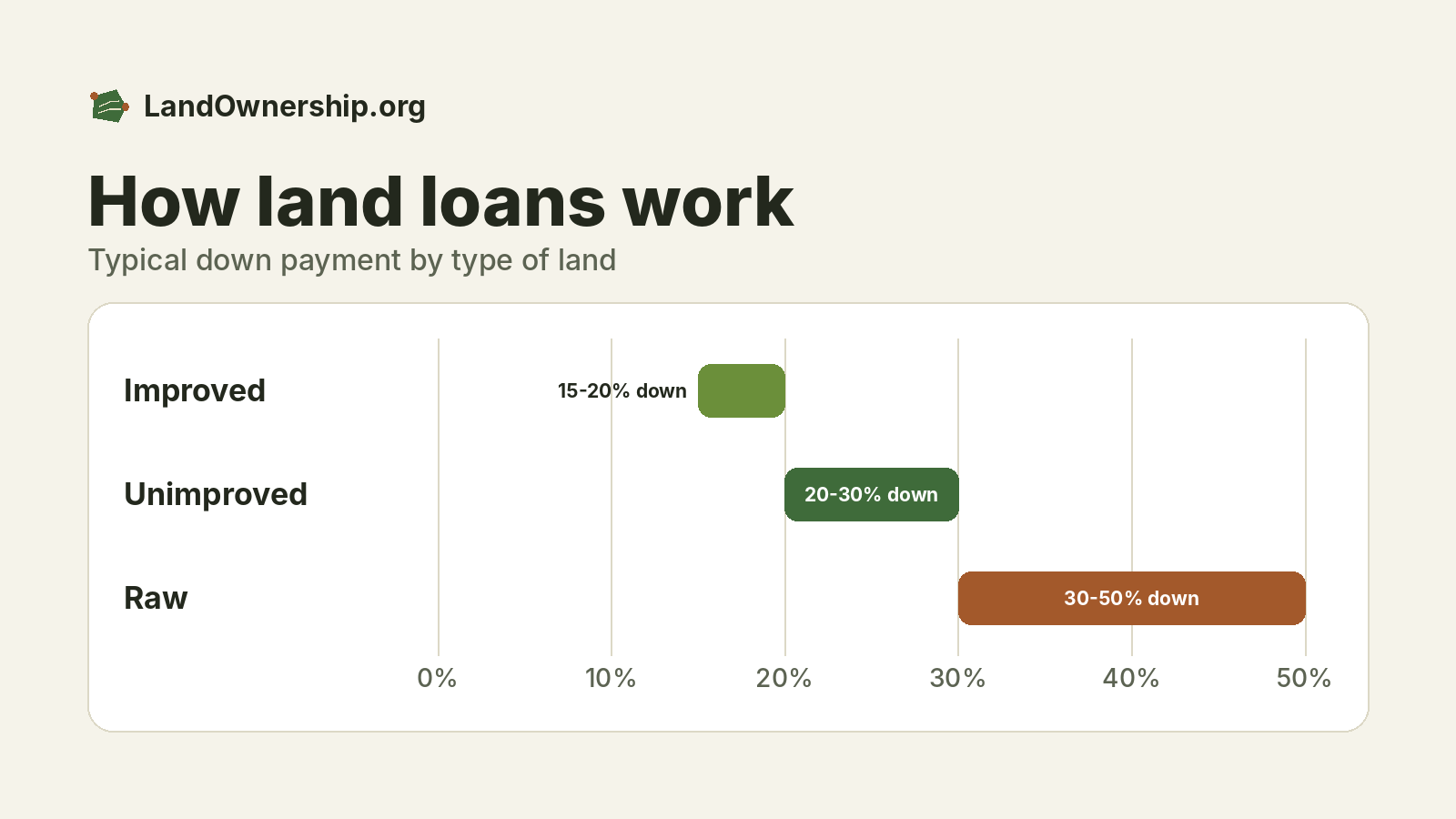
The emptier the land, the more you'll put down. Rocket Mortgage gives these typical ranges:
| Type of land | What it has | Typical down payment |
|---|---|---|
| Improved | Road access, power, water and sewer | 15% to 20% |
| Unimproved | Some basics, often road access | 20% to 30% |
| Raw | No utilities, roads or structures | 30% to 50% |
See what each means for your payment with the land loan calculator. More on the categories in raw land vs improved land.
Terms, rates and balloon payments
Experian puts land loan terms anywhere from 5 to 30 years, with rates typically higher than for a home loan. Many land loans are short, though: ValuePenguin notes that two- to five-year loans ending in a balloon payment are common. The monthly payment is calculated as if the loan ran much longer, which keeps it low, and the balance left at the end falls due all at once.
Before you sign a balloon loan, know exactly how you'll pay it: savings, a refinance, or rolling it into a construction loan.
Types of land financing
- Land or lot loans from local banks and credit unions, the most common route.
- Farm credit lenders, which specialize in agricultural and rural land.
- Construction-to-permanent loans if you'll build soon: one loan covers the land, the build and the mortgage afterward.
- Seller financing, where the owner carries the loan and you agree terms directly. Have a real estate attorney review it.
- Borrowing against a home you already own with a home equity loan or HELOC. The rate is often lower, but your house is the collateral. EquityEcho's HELOC calculator shows what you could borrow.
How to qualify
- Strong credit and low debt. Expect lenders to be stricter than for a mortgage on the same credit profile.
- A clear plan for the land. Lenders want to know whether you'll build, farm or hold it, and when. A buyer with a building plan and timeline looks less risky.
- Proof the land is usable. A survey, legal access, zoning that allows your plans and, if you'll need septic, a passing perc test.
- Cash for closing. Beyond the down payment, budget for the appraisal, survey, title insurance and lender fees. The land survey cost estimator covers one of the bigger items.
Shopping for a land loan
Big national mortgage lenders often don't offer land loans, so start with local banks, credit unions and farm credit associations that know the area's land values. Compare at least three: the down payment, rate, term, any balloon, prepayment penalties and fees. Small differences in rate matter less than a balloon you can't refinance, so read the whole term sheet.
Ready to buy? Run through how to buy land for the checks to make before you sign.
General information, not financial advice. Terms depend on the lender, the land and your finances.
Frequently asked questions
How much down payment do you need for a land loan?
Typically 15% to 20% for improved land, 20% to 30% for unimproved land and 30% to 50% for raw land, according to Rocket Mortgage. The lender sets the exact figure.
How long are land loans?
Experian puts land loan terms at 5 to 30 years. Many are shorter, two to five years, ending in a balloon payment of the remaining balance.
Are land loan rates higher than mortgage rates?
Usually, yes. Vacant land is riskier collateral, so lenders tend to charge more than for a home loan to the same borrower.