What is a perc test?
A perc (percolation) test measures how fast water soaks into the soil. If land has no city sewer, you'll need a septic system, and the septic permit usually depends on passing a perc test or soil evaluation. Land that fails may not be buildable without an expensive alternative system, which is why buyers test before they close.
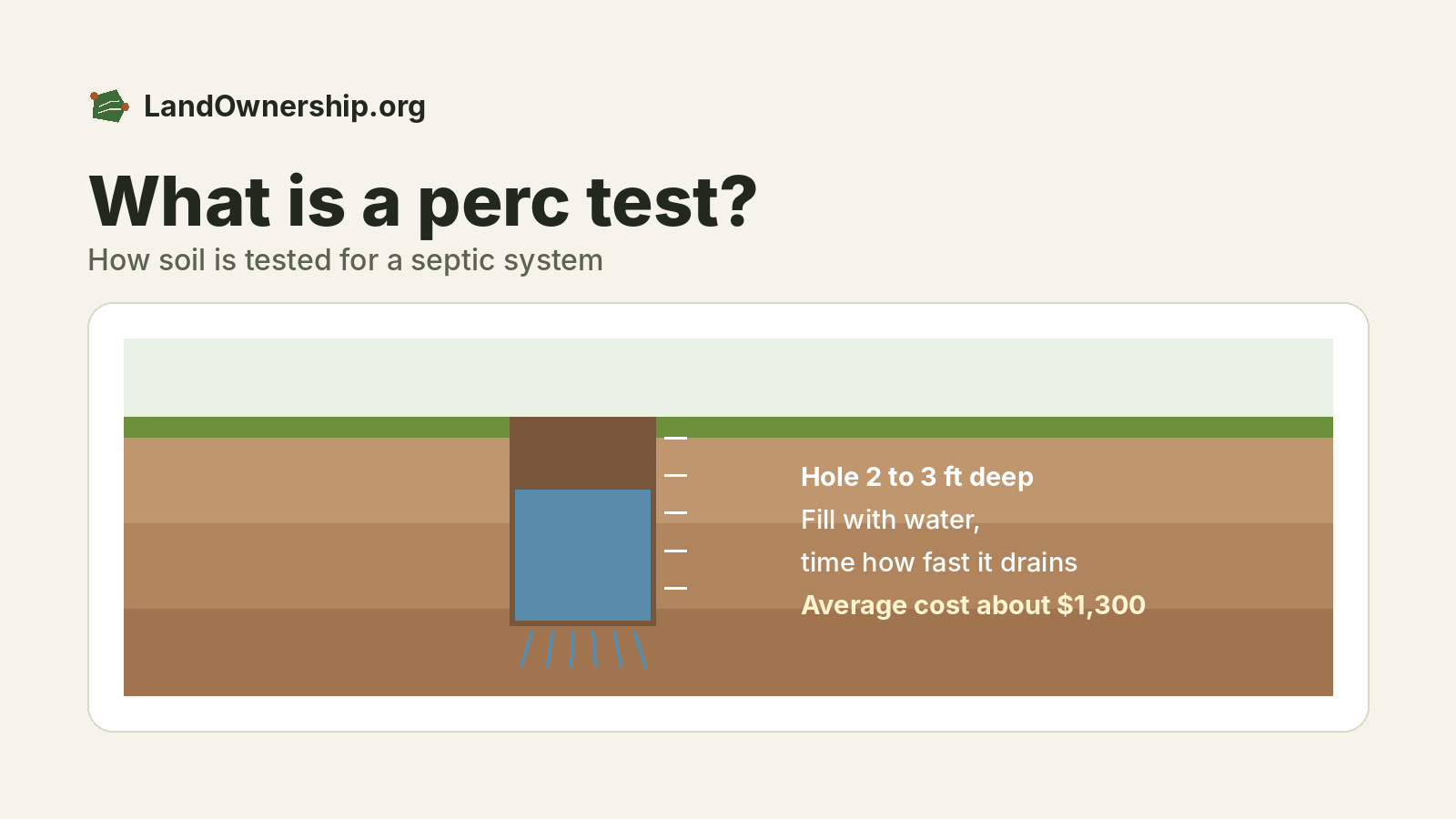
Why a perc test matters
A septic system sends wastewater from the house into a drain field, where the soil filters it. If the soil drains too slowly, the field floods. If it drains too fast, wastewater isn't filtered before it reaches groundwater. The perc test shows whether the soil falls in the workable range, and the result shapes the size and type of septic system the health department will approve.
How a perc test works
- Dig test holes where the drain field would go. For a simple test, Angi describes a hole two to three feet deep.
- Soak the soil so the reading reflects saturated conditions, often the day before.
- Fill with water and time it. The tester measures how far the water level drops over a set time, giving a rate in minutes per inch.
- Report the result to the county or state health department, which uses it to approve, size or reject a septic design.
The fieldwork for a simple test usually takes one to six hours, according to Angi. Some counties instead require a deep soil pit dug with an excavator and examined by a soil scientist or engineer.
How much does a perc test cost?
Angi puts the 2026 national average at about $1,300, with most people paying $750 to $1,900, depending on the property's size, the number of holes and access. HomeGuide splits it by method:
| Type of test | Typical cost |
|---|---|
| Hand-dug test holes and report | $200 to $1,500 |
| Excavator-dug test holes and report | $500 to $3,000+ |
Engineers or soil scientists for deep-hole testing cost extra. Some health departments charge their own permit or evaluation fee on top.
Who pays, and when to do it
Usually the buyer, though it's negotiable. The time to test is before closing: make your offer contingent on a passing perc test or septic approval, and give yourself enough days in the due diligence period to schedule it. Testing rules vary a lot, so call the county health department first to ask who may perform the test, whether any seasonal limits apply, and what they need in the report.
What if the land fails?
- Test another spot. Soil can change across a parcel, and a different drain field location may pass.
- Use an alternative system. Mound systems and other engineered designs can work in poor soils, but they cost more to build and maintain.
- Connect to sewer if a public line is close enough, which is rare for rural land.
- Renegotiate or walk away. A failed test is a good reason to ask for a lower price, or to use your contingency and get your deposit back.
Land that can't support any septic system may still be fine for recreation, timber or farming, but it's worth far less as a homesite. Factor that into the price per acre you're willing to pay.
Perc test checklist for buyers
- Ask the seller for any past perc results or septic permits. Old results may not be accepted, so check.
- Call the health department about requirements and approved testers.
- Put a perc contingency in the contract with enough time to complete it.
- Get the full report, not just "pass", and keep it with your land records.
A perc test is one of the costs of turning raw land into a homesite. See the others in how to buy land.
Frequently asked questions
What is a perc test?
A percolation test measures how quickly water soaks into the soil, to show whether the land can support a septic system. Health departments usually require one before issuing a septic permit.
How much does a perc test cost?
Angi puts the 2026 national average at about $1,300, with most people paying $750 to $1,900. Hand-dug tests can cost less and excavator-dug or engineered tests more.
What happens if land fails a perc test?
You may be able to test another spot, use an engineered alternative system such as a mound system, connect to sewer if it's nearby, or renegotiate or walk away if your contract allows.